

Table of contents
Scandinavian style: decorating like the Nordics
The Scandinavian style is one of the most beloved interior design movements in the world. Born in the Nordic countries (Sweden, Denmark, Norway, Finland), it celebrates natural light, simplicity, light wood, and a warm comfort that Danes capture in a single word: hygge. If you are looking for a clean, bright and serene home, this style is most likely for you.
In this guide, we dive into everything you need to know to nail a Scandinavian decoration: its origin, its color palette, the materials to favor, the pitfalls to avoid, and concrete tips to transform your living room, bedroom or kitchen. At the end, you will be able to test this style directly on a photo of your room with Shopia.
Origin of the Scandinavian style
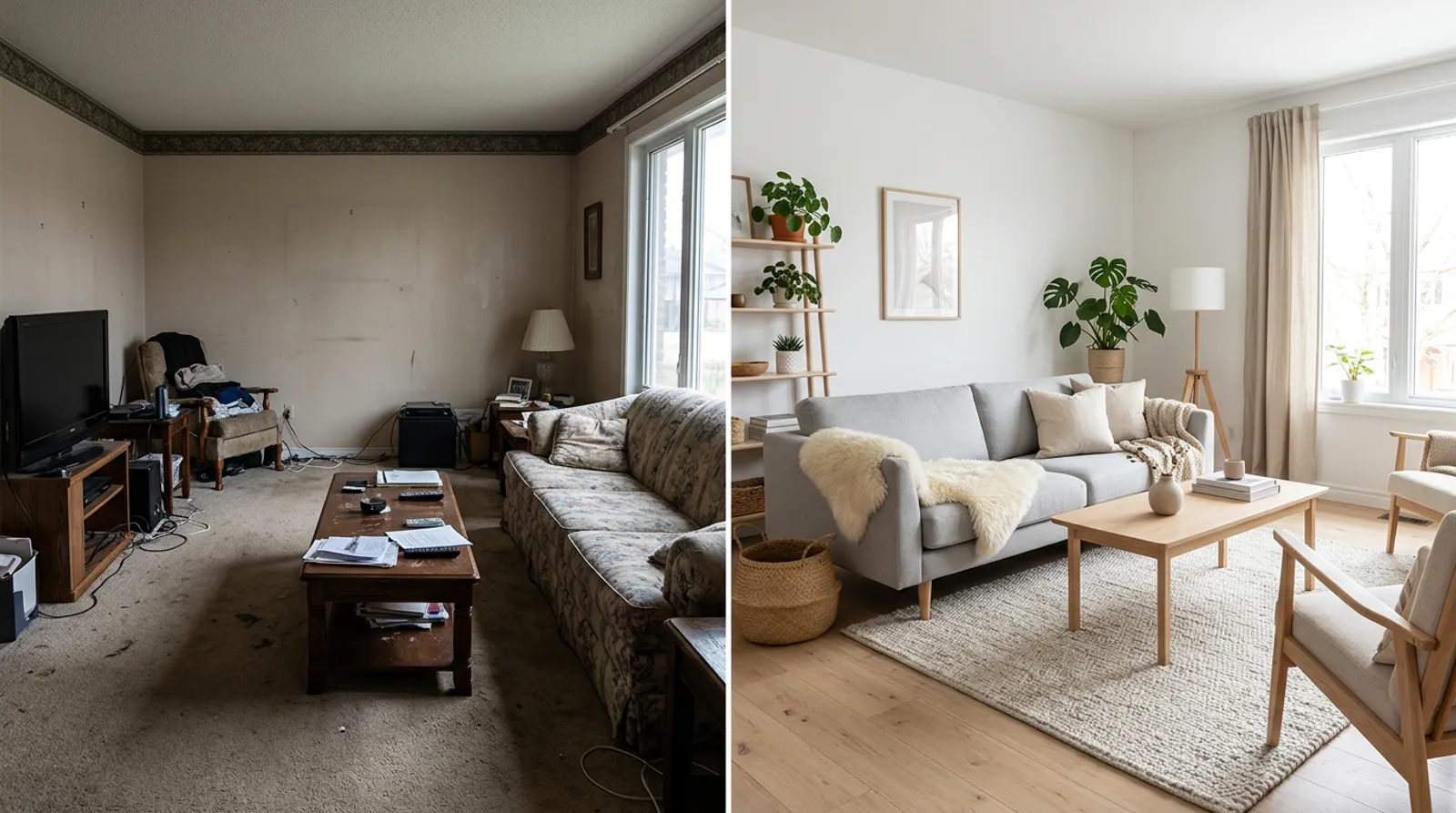 Design idea: a living room restyled in Scandinavian style
The Scandinavian movement emerged in the 1950s, in a region marked by long winters, little natural light, and a strong craft tradition. Nordic designers (Alvar Aalto in Finland, Arne Jacobsen in Denmark, Bruno Mathsson in Sweden) set out to create furniture that was affordable, functional, beautiful and durable.
Three principles still guide this aesthetic today:
- Light: maximize brightness in interiors where the sun is rare.
- Function: an object must serve, and serve well, before being beautiful.
- Comfort: home is a refuge from the cold; it must feel warm.
This philosophy (known as hygge in Denmark and lagom in Sweden) runs through every detail of Scandinavian decoration: aim for balance, never excess, neither in restraint nor in ornament.
And this style, in your room?
18 free credits on signup. No credit card needed.
See this style in my roomScandinavian color palette
A Scandinavian decoration relies on a light, natural palette that reflects light rather than absorbing it.
- Dominant colors: off-white, very light gray, pale beige.
- Accent touches: soft pastels (powder blue, pale pink, sage green), sometimes a graphic black to add structure.
- Light wood: bleached oak, birch, pine, all present on floors, furniture and decorative pieces.
Avoid saturated colors, violent contrasts, or dark browns: they weigh the room down and cut the sense of space and light, which is the soul of the style.
Materials and textures
The Scandinavian style celebrates natural, raw, tactile materials. The idea is not to hide the matter but to put it on display.
- Light wood: oak, birch, pine, ash. Often in a matte finish, never waxed or glossy.
- Natural textiles: bouclé wool, washed linen, thick cotton. Throws and rugs are essential to break up the coldness of bare floors.
- Artisan ceramics: simple tableware, raw vases, stoneware lamps.
- Leather: used sparingly, generally in tan or light brown, for an iconic armchair or chair.
Surfaces are matte, soft, never shiny. Prefer the velvet of washed linen over the polish of lacquered leather.
Characteristics of Scandinavian layouts
Beyond colors and materials, a Scandinavian interior is recognizable through several layout choices.
Open, uncluttered spaces
Air is queen. No overloaded furniture, no piled-up decorative objects. Every room breathes. Prefer a wide gap between two pieces of furniture over a useless extra piece.
Organic shapes and simple lines
Scandinavian furniture has clean lines, rounded angles, thin legs often made of wood. Think of the famous Wishbone chair by Hans Wegner or the PH lamp by Henningsen: no unnecessary ornament, just a perfect silhouette.
Light, everywhere
Scandinavian style is a religion of light. Multiply your light sources: central pendant, table lamp, wall sconce, corner floor lamp. Bulbs should be warm (2700 K), never icy white. Curtains are thin and translucent to let daylight through.
Hygge comfort
A deep sofa, a cozy throw, linen cushions, a thick wool rug: the visual and tactile warmth balances the coolness of the light palette. A candle on the coffee table, a bunch of eucalyptus, and the atmosphere shifts instantly.
7 concrete tips to nail a Scandinavian decoration
- Paint walls in off-white, not pure white. A hint of gray or beige softens the light and avoids the hospital effect.
- Choose a light wood floor or a vinyl plank that mimics bleached oak. Avoid dark tiles or thick carpets.
- Pick a few iconic pieces: a Hans Wegner chair, a PH lamp, an Alvar Aalto stool. One alone is enough to define the room.
- Multiply textiles: wool rug, linen cushions, mohair throw. This is what makes the room warm despite the cool palette.
- Add green plants: ficus, eucalyptus, monstera. Greenery is essential to the style.
- Limit decorative objects to 2 or 3 per shelf. Empty space matters as much as filled space.
- Pay attention to lighting: at least 3 light sources per room, all with warm bulbs.
Who is the Scandinavian style ideal for?
The Scandinavian style works particularly well in certain contexts:
- Low-light apartments: the light palette compensates for the lack of sun.
- Small surfaces: decluttering gives a sense of space.
- Families with children: sturdy furniture and natural materials age well and withstand daily use.
- Calm lovers: the absence of visual stimulation soothes the mind.
If you love warm vibes but dread the coldness of a too-white interior, consider the Japandi style (Japanese-Scandinavian fusion) or the Boho style, which shares the love of natural materials while allowing more colors.
Common mistakes to avoid
- Too much white kills white: without textiles or wood, the interior turns clinical.
- Generic flat-pack furniture: a bare Ikea sideboard without personality does not make a successful Scandinavian. Mix with one or two character pieces.
- Cold light: modern white LEDs (4000 K and above) instantly break the hygge feel.
- Overloading with accessories: three candles, two vases, a book. No more per surface.
Try the Scandinavian style on your room
Reading a guide is one thing; seeing the result on your own room is another. With Shopia, you upload a photo of your living room, bedroom or kitchen and our tool delivers a Scandinavian rendering in a few minutes. You can then compare before and after, fine-tune the furniture, and even find similar products online.
Frequently asked questions
What is the difference between Scandinavian and Japandi style?
Scandinavian style emphasizes Nordic light, pale wood (birch, ash, pine) and hygge comfort with pastel accents and chunky wool throws. Japandi takes the minimalism further by blending Japanese restraint with Nordic function: a warmer palette (beige, warm grey, soft black), wabi-sabi influence (raw ceramics, embraced imperfection) and lower furniture. Scandinavian feels bright and cozy, Japandi feels calm and contemplative.
How much does Scandinavian decor cost on average?
Budget around $400 to $1800 per room for a convincing result, depending on finishes. The secret: 2 or 3 iconic pieces (a Hans Wegner Wishbone chair around $700, a Poul Henningsen PH lamp around $450) paired with quality textiles (wool throw, jute rug) and pale wood. You don't need to replace everything: 5 well-chosen items are enough to transform a living room or bedroom.
Does Scandinavian style work in small rooms?
Yes, it actually shines in small spaces. The light palette (off-white, pale grey, birch wood) amplifies natural light, furniture on slim legs frees up the floor visually, and the decluttered approach creates an airy feel. Use wall-mounted storage, a compact two-seater sofa and a large mirror facing the window. Perfect for studios and rooms under 200 sq ft.
And this style, in your room?
18 free credits on signup. No credit card needed.
See this style in my roomRelated articles

Japandi Style: A Guide to Scandinavian-Japanese Serenity
Everything about Japandi style: Japanese × Scandinavian fusion, beige and grey palette, light wood, serenity and craft.

Minimalist style: living with the essentials
Everything about Minimalist style: less is more, clean palette, pure lines and 7 tips for living with the essentials.

What Is Provençal Style? Colors, Materials and Decor Tips
What Provençal style is and how to get it: lavender, ochre, wrought iron, terracotta floors and 7 tips to bring the South of France home.