

Table of contents
What paint color to choose for your walls?
Choosing wall colors paralyzes a lot of people, and for good reason: it is a commitment. You do not change paint the way you change a cushion. Yet with a simple rule and a few proven combinations, the choice becomes obvious. Here is the method and five combos ready to apply.
The 60-30-10 rule applied to walls
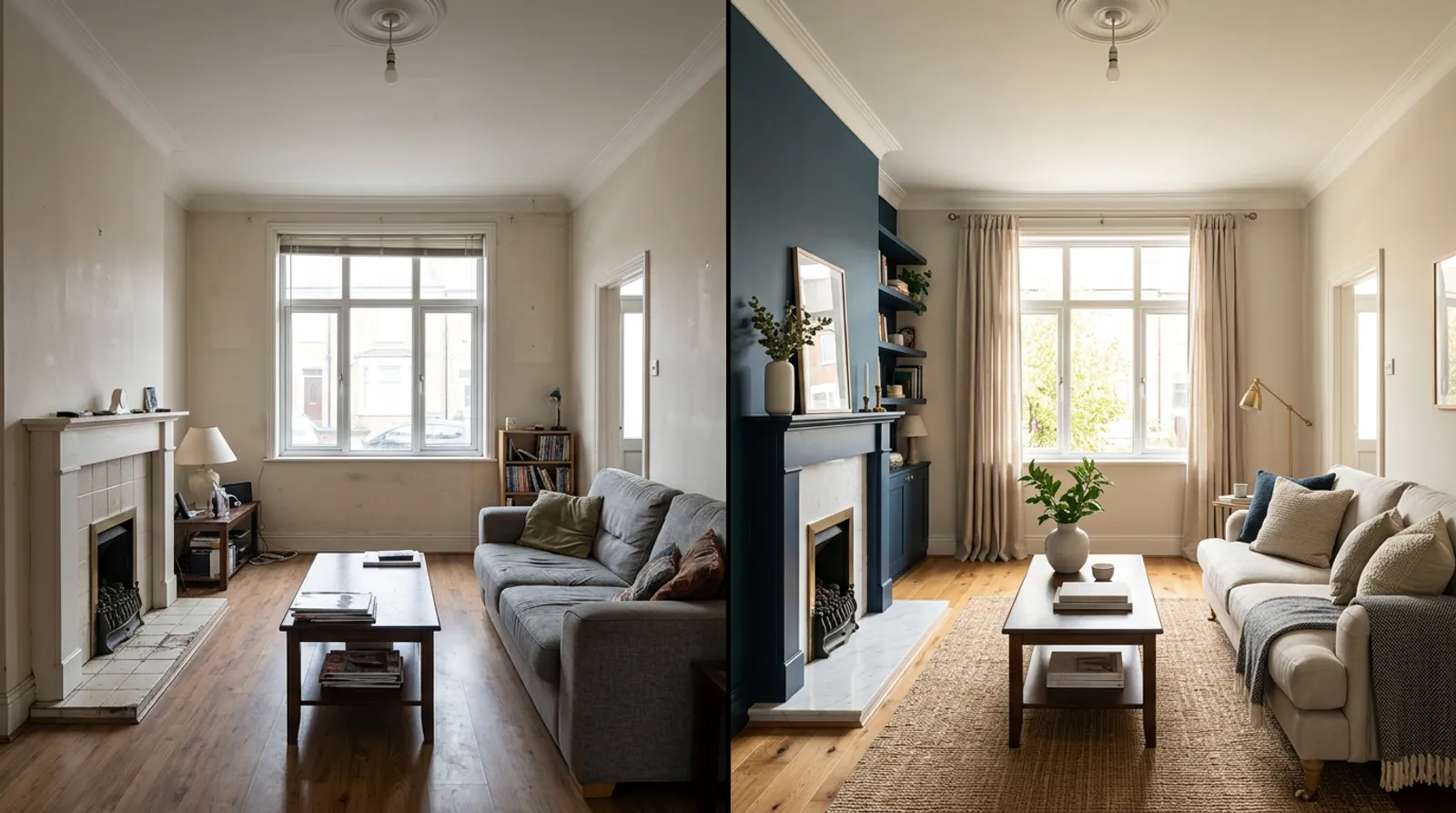 Design idea: a room transformed by the right wall paint color
A balanced room rests on three levels of color, and the walls play the lead role:
- 60% dominant: the main walls. A soft, neutral color, off-white, beige or light grey. The base that unifies the room.
- 30% secondary: furniture, curtains and rugs. A bolder color, natural wood, dark beige or sage green, that brings personality.
- 10% accent: cushions, objects, frames, and possibly an accent wall. A strong color, terracotta, teal or mustard, that catches the eye. Never more than 10%.
For the full logic behind this ratio, see the guide to the 60-30-10 rule.
Which wall to paint as an accent
The accent wall is always the one you see first when you enter. It catches the eye, so it deserves the color. The classic mistake is painting the wall behind the sofa, often invisible from the door: the effect is lost. A single accent wall is enough to add depth to a room without unbalancing it.
5 universal wall color combos
- Off-white + Wood + Terracotta: universal, warm, timeless. Works in every room.
- Pearl grey + Sage green + Gold: elegant and natural. Perfect for a living room or bedroom.
- Beige + Teal + Brass: chic and deep. Ideal in bright rooms.
- Warm white + Matte black + Mustard: contemporary and graphic, for those who dare a sharp contrast.
- Cream + Forest green + Cognac: luxe cocoon. Cognac leather warms the deep green.
You will find the exact color codes of these combinations in our home color palettes.
Test before you paint
The golden rule before reaching for the brush: test for 48 hours. Stick an A4 sample of the color on the wall and watch it at different times of day. Morning light, afternoon light and evening lighting give three different results. A color that is appealing in the store can disappoint once it is up.
3 golden rules
- 60-30-10: never more than three main colors in a room.
- Accent wall: the first wall visible on entering, not a hidden one.
- Test for 48 hours with a sample before painting.
The mistakes to avoid
- Painting all four walls in the same strong color: flat, no depth.
- Placing the accent wall behind the sofa, where you do not see it.
- Adding more than three colors: the eye no longer knows where to land.
- Painting without testing: light transforms everything.
- White everywhere: a hospital look rather than a home.
Test your walls on your room
Repainting costs time and money, and a swatch never lets you really picture the result. With Shopia, you photograph your room, apply a wall color, and get a realistic render in a few minutes. You compare several shades side by side before buying a single can of paint.
Do you sell decorative paint? See how your catalog fits into Shopia and shows up on your customers' walls.
Frequently asked questions
What color should you choose for living room walls?
For a living room, start from a soft, neutral dominant color on the main walls: off-white, beige or light grey. It unifies the room and shows off the furniture. Reserve a bolder color (sage green, teal, terracotta) for a single accent wall. This split follows the 60-30-10 rule: 60% neutral, 30% secondary color in furniture and textiles, 10% accent. Avoid painting all four walls in the same strong shade, which overwhelms the space.
Which wall should be the accent color?
The accent wall is the one you see first when you enter the room, not the one hidden behind the sofa or the door. It is the one that catches the eye and sets the tone. Painting a wall that is invisible from the entrance wastes the effect: you do not perceive it. A single accent wall is enough; two blur the reading of the room.
Should you test the paint before painting the whole wall?
Yes, it is essential. Natural and artificial light dramatically change how a color looks throughout the day. Stick an A4-sized sample directly on the wall and watch it for 48 hours, morning, afternoon and evening. A color that looks perfect in the store can turn once it is in your home. This test of a few dollars saves repainting an entire room.
Related articles

How to combine colors at home (the 60-30-10 rule)
The 60-30-10 rule explained simply: 60% dominant color, 30% secondary, 10% accent. The decorator's method to harmonize any room without buying everything new.

Which colors go together? 10 ready-to-use palettes
10 ready-to-use interior color palettes, with their hex codes, mood and the rooms where they work. Pick your palette before you buy to avoid visual chaos.

Living room ideas: design a warm, welcoming space
Everything about living room decoration: palette, furniture, lighting, styles that work and 7 tips for a warm, inviting space.