

Table of contents
How to light your home the right way
You have spent on decor, picked nice colors, and yet the room feels cold at night? Nine times out of ten, it is the lighting. A single ceiling light in the middle of the room flattens everything. The good news: it is one of the most cost-effective decorating levers, and one of the simplest to fix. Here is the complete method, room by room.
Why lighting changes everything
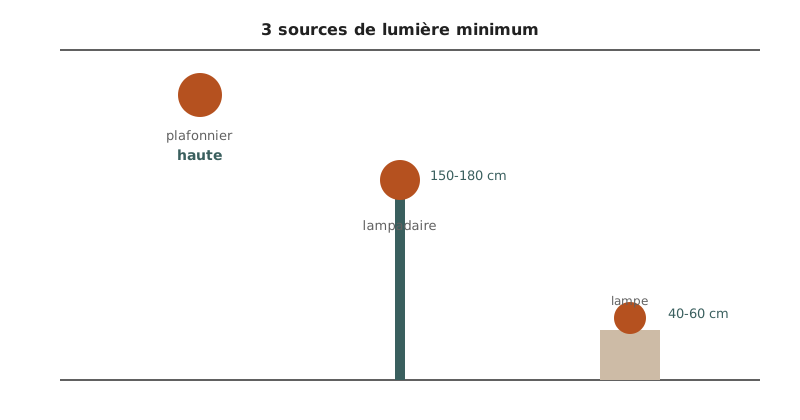 Diagram: the rule at a glance
Your brain perceives depth through variations in light and soft shadows. A single source is uniform, so flat, so cold. Several sources at different heights create relief and warmth. That is what separates a welcoming hotel room from a train station hall.
The 3-source rule
The universal rule fits in one sentence: at least three light sources per room.
- 1 high light (ceiling light or pendant) for general lighting.
- 1 medium light (floor lamp) for ambient lighting.
- 1 low light (table lamp) for cozy lighting.
If you only have a ceiling light, add a single corner floor lamp: you already change half the mood.
Lighting room by room
Living room: central pendant at 2700-3000K, a corner floor lamp at 150-180 cm high placed 30-50 cm from the wall, and table lamps on the consoles. Above a coffee table, a pendant sits 60-80 cm from the top.
Bedroom: a soft, dimmable ceiling light at 2700K, two bedside lamps 50 to 70 cm high, one on each side. With no headboard, a pendant sits 60-80 cm above the mattress. Everything should be dimmable, to shift from reading to sleeping.
Kitchen: the only living space where neutral white (4000K) is accepted, because you need to see clearly. Central ceiling light, spots under the wall cabinets (non-negotiable for worktop safety), and a pendant 70-80 cm above the island if you have one.
Dining room: the pendant above the table is the focal point. Height of 70-80 cm above the top, width equal to half or two-thirds of the table, dimmer essential.
Bathroom: general ceiling light (4000K accepted), and above all two sconces on each side of the mirror, at 160-180 cm from the floor. Above the mirror, light digs shadows under the eyes and gives a tired look.
Color temperature (Kelvin): the invisible mistake
Color temperature, shown in Kelvin on every bulb, sets the mood. The most common mistake is mixing warm and cold whites in the same room: your brain detects the inconsistency without being able to name it.
- 2700K: extra-warm white, for the bedroom and a cozy living room.
- 3000K: warm white, the living room and dining room standard.
- 4000K: neutral white, reserved for the kitchen and bathroom.
- 5000K and above: cold white, banned from living spaces (hospital look).
The fix: pick your camp and make sure all the bulbs in a room share the same temperature. A pack of three 2700-3000K LED bulbs costs around fifteen dollars: it is the simplest and most radical change.
Which lamps to invest in first
Three good lamps beat ten budget lamps that yellow within eighteen months. At equal budget, the perception changes completely. Spot quality in a few details: a braided cord rather than bare plastic, a metal switch that does not click, a heavy, stable base. A 50 cm lamp that weighs under a kilo is almost always low-end.
The three purchases to prioritize:
- The living room floor lamp: the first thing visible on entering, it changes half the mood on its own.
- The dining room pendant: focal point of the meal, choose a diameter of at least half the table, with a dimmer.
- The pair of bedside lamps: you see them twice a day. Get them identical, never mismatched.
5 golden rules
- At least three light sources per room: high, medium, low.
- 2700-3000K in all living spaces.
- Never a single ceiling light in the middle of the room.
- Vary the light heights to create depth.
- Everything on a dimmer when possible.
The mistakes that kill the mood
- A single ceiling light: flat, cold light.
- Cold white (5000K and above) in a living space: hospital atmosphere.
- All lights at the same height: no relief.
- A sconce above the bathroom mirror: shadows on the face.
- A dining room pendant hung too high or too low.
Test your lighting on your room
Lighting is felt more than it is described. With Shopia, you photograph your room and visualize a realistic render in a few minutes, warm ambiances included, to picture it before buying a single fixture. Also remember to match your colors to your light: see the 60-30-10 rule for a coherent whole.
Frequently asked questions
How many light sources do you need per room?
At least three sources per room: one high light (ceiling light or pendant) for general lighting, one medium light (floor lamp) for ambiance, and one low light (table lamp) for a cozy feel. A single ceiling light in the middle of the room gives a flat, cold light that kills the mood, even if the rest of the room is perfect. Varying the heights creates depth and soft shadows.
Which color temperature (Kelvin) should you choose?
For living spaces (living room, bedroom, dining room), choose 2700K to 3000K, a warm white that creates a welcoming feel. The kitchen and bathroom can take 4000K, a neutral white, because you need to see precisely. Avoid 5000K and above, a cold white that gives a living room a hospital atmosphere. The key rule: every bulb in the same room must share the same temperature, no exceptions.
How high should you hang a light above a table?
Hang the light 70 to 80 cm above the dining table top. Lower, it blocks the line of sight between guests; higher, it lights poorly and loses its role as a focal point. For width, aim for a diameter equal to half or two-thirds of the table width. A pendant with a dimmer is ideal for adjusting intensity to the meal.
Related articles

How to combine colors at home (the 60-30-10 rule)
The 60-30-10 rule explained simply: 60% dominant color, 30% secondary, 10% accent. The decorator's method to harmonize any room without buying everything new.

What paint color to choose for your walls?
How to choose your wall paint colors: the 60-30-10 rule, which wall to paint as an accent, 5 universal combos and the mistakes to avoid.

Living room ideas: design a warm, welcoming space
Everything about living room decoration: palette, furniture, lighting, styles that work and 7 tips for a warm, inviting space.