

Table of contents
- Why an object that is too small disappears
- The rule of thirds: the right height in one multiplication
- The right dimensions by furniture type
- The right dimensions by room
- The rule of three: build with three heights
- What to put on a console or sideboard: the winning trio
- The mistakes that cost you money
- Test your decor objects on your room
What size vases and decor objects to choose
Do your decor objects vanish instead of structuring the room? Most of the time it is not a question of style or color: it is a question of size. A vase that is too small gets flagged by the eye in under two seconds and filed as insignificant. Ten cute little vases in a row are not decor, they are clutter. The good news is that there is a simple rule to pick the right height every time, and it comes down to one multiplication.
In this guide you will see why an object that is too small disappears, how to apply the rule of thirds for height, what dimensions to aim for by furniture type and by room, how to build a trio of three heights, and which mistakes waste your money on useless objects.
Why an object that is too small disappears
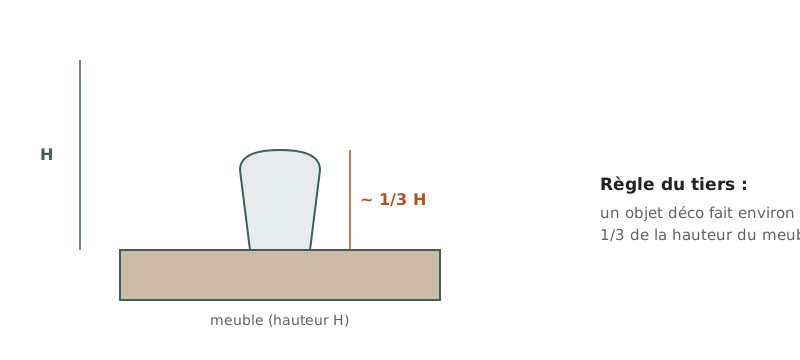 Diagram: the rule at a glance
Four signals instantly give away failed styling, and three of them are about size:
- Too small: the object is invisible, it fades out, zero visual impact.
- All the same height: a flat, monotonous effect with no rhythm or relief.
- Too wide for the furniture: visual imbalance, broken proportions.
- No coherence: ten mismatched little objects read as clutter.
Remember the threshold: below 15 cm, an object sitting on a console or a dresser is simply invisible. The useful minimum on a large piece is 20 cm.
The rule of thirds: the right height in one multiplication
The rule holds everywhere: a vase should be about one third of the furniture height. Measure the furniture, multiply by 0.33, and you get the minimum object height. This proportion guarantees visual impact without breaking the balance of the piece.
In practice, an 80 cm entryway console calls for a vase of at least 25 to 30 cm. A 90 cm dresser, a vase of around 30 cm. The taller the furniture, the taller the object has to be to stay visible. It is the same proportion logic as choosing your furniture by room: an undersized object gets lost, exactly like a sofa that is too small in a large living room.
The right dimensions by furniture type
Here are the reference heights to aim for, piece by piece:
- Entryway console (80 cm): vase of 25 to 30 cm minimum.
- Dresser (90 cm): vase of around 30 cm.
- Tall dresser (120 cm): vase of around 40 cm.
- TV unit (50 cm): vase of 15 to 20 cm.
- Dining table (on the top): vase of 20 to 25 cm.
- Desk (75 cm): vase of 15 to 20 cm.
- Nightstand (50 cm): vase of 15 to 20 cm.
The right dimensions by room
The room changes the use, so it changes the size:
- Entryway (80 cm console): aim for 30 to 40 cm for immediate impact as you walk in. This is where you can allow a statement piece, a bold color or an architectural shape.
- Living room (50 cm TV unit): 25 to 35 cm, to stay visible from the sofa. Two to three vases maximum to avoid visual clutter.
- Dining room (on the table): 20 to 25 cm maximum, never more. Beyond that, the object blocks the view between guests.
- Bedroom (90 cm dresser): 20 to 30 cm, present without overwhelming. Soft, natural tones, one or two vases at most.
- Desk (75 cm): 15 to 20 cm, discreet so it does not distract. A single object is enough.
The rule of three: build with three heights
A single vase often looks monotonous. The secret to relief is to build a trio of three different heights. The ideal composition: a large vase (one third of the furniture), a medium one (about two thirds of the large), and a small one (about half of the large).
On an 80 cm console, that gives, for example, a large 30 cm vase (the main impact), a medium 20 cm one (visual support) and a small 15 cm one (the finishing touch). Why it works: the trio creates rhythm, the odd number is more harmonious than an even one, and the group structures the space without overloading it. For placement, set the large vase at the back or to the side, keep a compact cluster (not lined up like soldiers) and let it breathe by not crowding the edges of the furniture.
What to put on a console or sideboard: the winning trio
On an entryway console the rule is crisp: three objects maximum, three different heights, and the empty space does the rest. The reference trio:
- A table lamp (the tall object): it gives the group its height and a warm light right at the entrance. Choose a slim model, 15 cm in diameter at most, in warm white (2700K), never cool white.
- A decor object (the medium object): vase, sculpture, photo frame or a small dried bouquet. Lower than the lamp, taller than the catch-all dish. This one sets the style, and a single object is enough, not three trinkets.
- A tray or catch-all dish (the low object): functional and good-looking, for keys and coins. Pick a material that matches the console (wood, ceramic, brass) and avoid plastic.
The three form a visual triangle: the eye moves naturally from top to bottom. Stick to an odd number, and remember that the empty space between objects matters as much as the objects themselves. To go further on the console itself, see our guide to entryway ideas.
The mistakes that cost you money
The classic mistake: buying on impulse, without measuring. Ten small vases at 15 each add up and create clutter; six months later they end up in a cupboard and you have to buy three nice vases anyway. It is better to invest from the start in three beautiful objects at the right heights: immediate impact, a gallery effect, and decor that lasts for years. Other traps to avoid: placing everything at the same height (flat composition), picking an object that is too wide for the furniture (imbalance), or going over 25 cm on a dining table.
Your checklist before buying: measure the furniture, multiply by 0.33 for the minimum height, favor a large-medium-small trio, check that colors and materials are coherent, and invest in quality rather than quantity.
Test your decor objects on your room
Reading dimensions is one thing; seeing them placed on your own furniture is far more convincing. With Shopia, you photograph your room, choose your objects and their style, and get a realistic render in a few minutes. You can compare before and after, test a large vase against a trio, and fine-tune the proportions before buying anything.
Frequently asked questions
What height vase should I choose for a console or a dresser?
Aim for about one third of the furniture height. For an 80 cm entryway console, choose a vase of at least 25 to 30 cm; for a 90 cm dresser, around 30 cm; for a 120 cm tall dresser, around 40 cm. The quick math is simple: measure the furniture and multiply by 0.33 to get the minimum vase height. Below 15 cm an object becomes almost invisible and has no impact, so stay at a minimum of 20 cm on large furniture.
What is the rule of three for styling a console?
Place three objects maximum, in three different heights: a tall object, a medium one and a low one. On an entryway console, the winning trio is a table lamp (the tall object), a decor piece such as a vase or sculpture (the medium object) and a tray or catch-all dish (the low object). The three form a visual triangle and the eye travels naturally from top to bottom. Always keep an odd number, three or five objects, never two or four, and leave empty space between them.
What size vase works on a dining table?
On a dining table, stay at 20 to 25 cm maximum. Beyond that, the vase blocks the line of sight and cuts off the conversation between guests. Prefer clean, discreet shapes: a single central object, or three small vases in a row. It is the one spot where a large statement vase is not a good idea.
Related articles

What size furniture for each room
The right dimensions for every piece (sofa, bed, table, rug) with precise measurements in cm, room by room, so you never buy too big or too small again.

What size sofa and coffee table to choose
The simple method to pick the right sofa and coffee table size: the two-thirds rule, the right height, and the walking clearances to keep.

Entryway ideas: welcoming and functional
Everything about entryway decoration: storage, mirror, console, styles that work and 7 tips for a great first impression.